Abstract
In modern manufacturing, precision, efficiency, and stability define competitiveness. The CNC machining input spindle plays a critical role in determining the overall performance of machining systems. This article explores how an input spindle influences machining accuracy, surface quality, production efficiency, and operational reliability. It also addresses common customer challenges such as vibration control, heat management, tool wear, and compatibility issues. By understanding the structure and function of CNC machining input spindles, manufacturers can make informed decisions that improve long-term productivity and reduce operational costs.
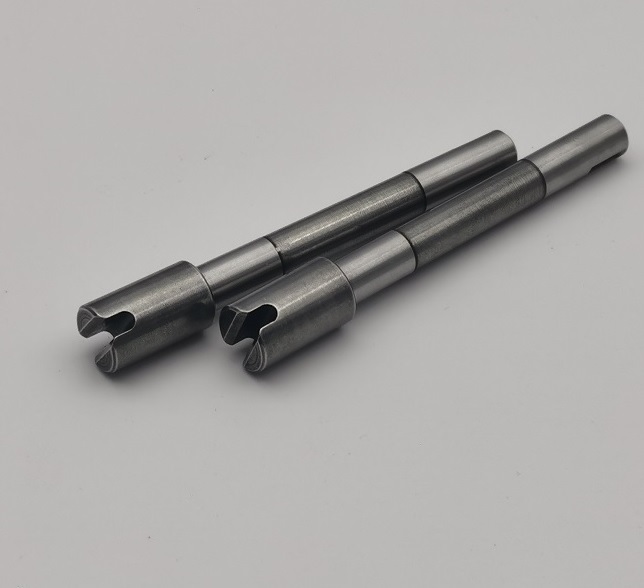
1. Overview of CNC Machining Input Spindle
The CNC machining input spindle is a fundamental component that drives cutting tools in CNC systems. It transfers power from the motor to the cutting tool, ensuring controlled rotation, torque stability, and machining accuracy. In high-speed machining environments, even minor spindle imbalances can lead to reduced precision and poor surface finishes.
Modern manufacturing industries such as aerospace, automotive, mold processing, and precision engineering rely heavily on advanced spindle systems to achieve consistent results under demanding conditions.
2. Core Functions and Working Principle
The input spindle operates as the mechanical and dynamic heart of a CNC machine. It ensures energy transfer and rotational control with minimal loss.
-
Power Transmission: Transfers motor energy into rotational motion for cutting tools.
-
Speed Regulation: Maintains precise RPM control for different machining tasks.
-
Torque Delivery: Ensures stable cutting force under heavy load conditions.
-
Thermal Stability: Reduces deformation caused by heat generation during operation.
The precision of these functions directly affects machining accuracy and product consistency.
3. Why Input Spindle Quality Matters
A high-quality CNC machining input spindle ensures reduced vibration, improved tool life, and higher surface finish quality. Poor spindle performance often results in:
-
Excessive tool wear
-
Dimensional inaccuracies
-
Increased machine downtime
-
Higher maintenance costs
Therefore, selecting a reliable spindle is essential for achieving long-term production efficiency and cost control.
4. Key Benefits in Industrial Applications
The CNC machining input spindle provides several performance advantages across different manufacturing sectors:
-
High Precision Machining: Ensures tight tolerance control in complex components.
-
Improved Surface Finish: Reduces tool chatter and vibration marks.
-
Enhanced Productivity: Supports high-speed cutting operations.
-
Extended Tool Life: Minimizes wear through stable rotational dynamics.
-
Energy Efficiency: Optimized power transmission reduces energy waste.
5. Technical Comparison Table
|
Feature
|
Standard Spindle
|
High-Performance CNC Input Spindle
|
|
Rotational Accuracy
|
Moderate
|
High precision with minimal deviation
|
|
Vibration Level
|
Noticeable under load
|
Low vibration design
|
|
Heat Dissipation
|
Limited
|
Advanced thermal control system
|
|
Tool Life Impact
|
Average
|
Extended tool lifespan
|
|
Maintenance Frequency
|
Higher
|
Reduced maintenance requirement
|
6. Common Problems and Solutions
Many operators encounter challenges when working with CNC input spindles. Below are typical issues and their solutions:
-
Overheating: Often caused by poor lubrication or excessive load. Solution: ensure proper cooling system maintenance.
-
Vibration Noise: Caused by imbalance or wear. Solution: regular calibration and inspection.
-
Reduced Accuracy: Often linked to bearing wear. Solution: timely replacement of worn components.
-
Tool Slippage: Caused by insufficient torque transfer. Solution: use high-quality spindle systems.
7. How to Choose the Right Input Spindle
Selecting the appropriate CNC machining input spindle requires evaluating several key factors:
-
Machine Compatibility: Ensure spindle matches CNC system specifications.
-
Speed Requirements: Choose based on operational RPM needs.
-
Load Capacity: Consider material hardness and cutting force.
-
Cooling System: Air-cooled or liquid-cooled options depending on workload.
-
Precision Level: Higher precision for aerospace and mold industries.
A well-matched spindle significantly improves machining stability and reduces operational risks.
8. Maintenance and Service Tips
Proper maintenance ensures long spindle life and consistent performance:
-
Regular lubrication checks
-
Periodic vibration testing
-
Cleaning of cooling channels
-
Inspection of bearings and seals
-
Avoiding overload operations
Preventive maintenance reduces downtime and improves production efficiency over time.
9. Frequently Asked Questions
Q1: What is the main role of a CNC machining input spindle?
It transfers power from the motor to the cutting tool while ensuring stable rotation and precision machining.
Q2: How often should a spindle be maintained?
Maintenance intervals depend on usage, but regular inspection every few months is recommended in industrial environments.
Q3: What causes spindle vibration?
Vibration can result from imbalance, worn bearings, or improper installation.
Q4: Can spindle performance affect product quality?
Yes, spindle stability directly impacts surface finish, dimensional accuracy, and tool lifespan.
Final Thoughts
The CNC machining input spindle is a critical factor in achieving high-performance machining results. Its influence extends across precision, efficiency, tool durability, and operational stability. Choosing a high-quality spindle is not just a technical decision but a long-term investment in productivity and cost optimization.
Ningbo Jinggang Machinery Co., Ltd. is committed to delivering reliable CNC machining input spindle solutions designed for demanding industrial applications. Our engineering expertise focuses on durability, precision, and performance consistency across diverse machining environments.
To learn more about our products or discuss your machining requirements, please contact us today and let our team provide you with tailored solutions for your manufacturing needs.
 English
 Español
  Português
  русский
  Français
  日本語
日本語  Deutsch
  tiếng Việt
  Italiano
  Nederlands
  ภาษาไทย
  Polski
  한국어
한국어  Svenska
  magyar
  Dansk
Dansk  Suomi
Suomi  العربية
  ελληνικά
  český
český