 English
 Español
  Português
  русский
  Français
  日本語
日本語  Deutsch
  tiếng Việt
  Italiano
  Nederlands
  ภาษาไทย
  Polski
  한국어
한국어  Svenska
  magyar
  Dansk
Dansk  Suomi
Suomi  العربية
  ελληνικά
  český
český 

How Custom Stainless Steel Wobble Sensor Weldment Supports Smart Manufacturing Trends
Smart manufacturing is changing how industrial equipment collects data, monitors performance and responds to operating conditions. With the development of Industry 4.0, manufacturers are increasingly integrating sensors, automation systems and digital monitoring technologies into production equipment to improve process visibility and operational control.
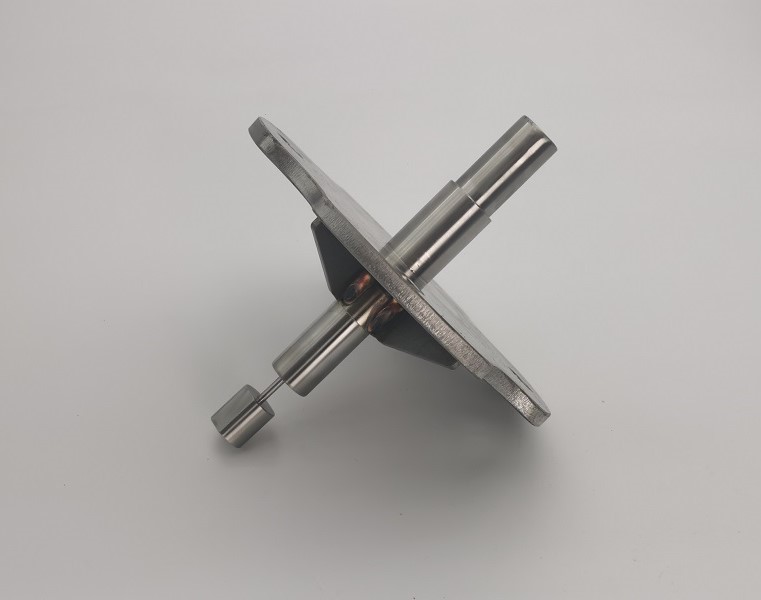
Within these systems, mechanical components that support sensors play an important role in maintaining measurement accuracy and equipment stability. A Custom Stainless Steel Wobble Sensor Weldment represents one type of precision-fabricated structure designed for sensor mounting, positioning and mechanical integration in industrial applications.
Unlike traditional mechanical brackets or simple welded supports, sensor weldments often require careful consideration of geometry, material properties, welding distortion and dimensional accuracy. As industrial equipment becomes more automated, the requirements for supporting components are also evolving toward higher precision and better compatibility with smart monitoring systems.
Sensor Integration Is Driving New Requirements for Industrial Components
Modern manufacturing systems increasingly rely on real-time information from sensors installed throughout machines and production lines. These sensors help monitor equipment conditions, detect process changes and provide data for maintenance planning.
For sensor-based systems to operate effectively, the mechanical structures holding sensors must maintain stable positioning during operation. Factors such as vibration, thermal changes, repeated loading and environmental exposure can influence sensor accuracy.
A Custom Stainless Steel Wobble Sensor Weldment addresses these engineering considerations by combining stainless steel material characteristics with welded structural design. The component can integrate mounting surfaces, sensor positioning areas and reinforced sections into a single fabricated assembly.
This type of integrated structure reduces the need for multiple connecting parts while providing a stable foundation for sensor installation in industrial equipment.
Stainless Steel Selection for Sensor Weldment Applications
Material selection is a key factor in industrial sensor assemblies. Stainless steel is widely used in mechanical components where corrosion resistance, durability and structural stability are required.
For a Custom Stainless Steel Wobble Sensor Weldment, stainless steel provides several functional advantages:
The specific stainless steel grade depends on application requirements, including mechanical loading, environmental conditions and fabrication methods.
Precision Welding Becomes More Important in Automated Manufacturing
As manufacturing moves toward greater automation, welding processes are also becoming more data-driven. Modern welding systems increasingly incorporate sensors, digital monitoring and feedback control to improve consistency and reduce process variation. Research into intelligent welding systems highlights the growing role of sensing technologies, artificial intelligence and data analysis in welding process monitoring and quality control.
For complex welded components, controlling heat input and distortion remains an important engineering challenge. Welding deformation can affect:
Manufacturing a Custom Stainless Steel Wobble Sensor Weldment requires attention to welding sequence, fixture design and post-weld inspection. These factors help maintain the dimensional relationships required for sensor-based equipment.
The Role of Smart Manufacturing in Component Traceability
Another important trend in smart manufacturing is improved production traceability. Digital manufacturing systems increasingly connect design data, production records and inspection information to create a more transparent manufacturing process.
For precision welded components, traceability may include:
This information supports quality analysis and continuous process improvement, especially for components used in automated equipment systems.
The movement toward connected manufacturing is encouraging suppliers and equipment developers to pay more attention to how individual mechanical parts contribute to overall system performance.
From Traditional Fabrication to Data-Driven Manufacturing
Traditional welded fabrication often relied heavily on operator experience and post-production inspection. However, smart manufacturing trends are shifting toward earlier detection, process monitoring and improved production feedback.
Sensor-enabled manufacturing environments can collect information during production, allowing engineers to better understand process behavior and identify potential issues.
For welded components, this transition means manufacturers are focusing more on:
These developments are particularly relevant for custom components where each design may involve unique geometries and application requirements.
Custom Stainless Steel Wobble Sensor Weldment in Industrial Equipment Development
The development of industrial equipment increasingly requires customized mechanical structures rather than standard off-the-shelf components.
A Custom Stainless Steel Wobble Sensor Weldment can be designed around specific equipment requirements, including:
This customization approach supports equipment designers who need mechanical components that fit precise system configurations.
In applications involving automation, inspection equipment, robotics and industrial monitoring systems, the mechanical design of sensor-support structures can directly influence measurement reliability and equipment operation.
Future Trends: Combining Sensors, Automation and Precision Fabrication
The future development of smart manufacturing will continue to connect physical equipment with digital systems. Industrial automation trends show increasing adoption of connected sensors, real-time monitoring and intelligent control technologies.
As these technologies develop, supporting mechanical components will need to meet higher requirements for:
The evolution of components such as the Custom Stainless Steel Wobble Sensor Weldment reflects a broader shift in manufacturing: mechanical structures are no longer only passive supports but important elements within intelligent industrial systems.
By combining appropriate materials, controlled welding processes and accurate fabrication methods, these components help create more reliable foundations for the next generation of smart manufacturing equipment.
Send Inquiry



X
We use cookies to offer you a better browsing experience, analyze site traffic and personalize content. By using this site, you agree to our use of cookies.
Privacy Policy