 English
 Español
  Português
  русский
  Français
  日本語
日本語  Deutsch
  tiếng Việt
  Italiano
  Nederlands
  ภาษาไทย
  Polski
  한국어
한국어  Svenska
  magyar
  Dansk
Dansk  Suomi
Suomi  العربية
  ελληνικά
  český
český 

How Does CNC Machining Input Spindle Improve Precision and Performance in Modern Manufacturing?
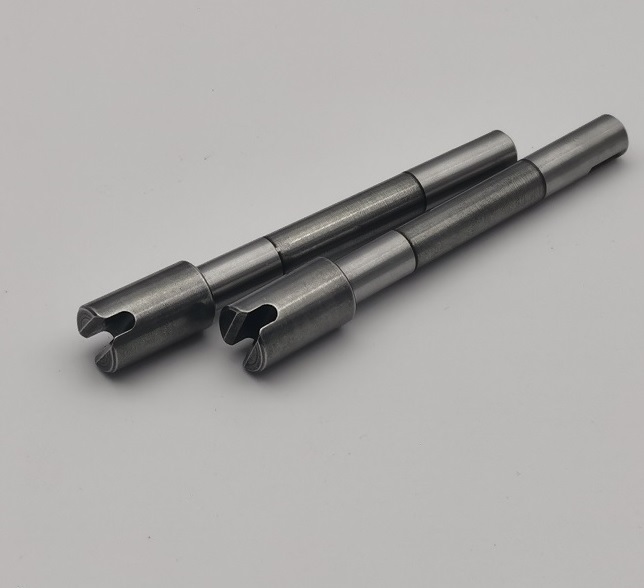
In the world of precision manufacturing, the CNC Machining Input Spindle plays a critical role in ensuring smooth power transmission, high machining accuracy, and reliable operational performance. Whether used in industrial machinery, marine equipment, automation systems, agricultural machinery, or customized mechanical assemblies, a high-quality input spindle directly affects efficiency, durability, and overall product quality.
Many buyers struggle with issues such as premature wear, poor dimensional accuracy, inconsistent machining quality, and limited customization options when sourcing spindle components. Understanding how CNC machining input spindles work and selecting the right manufacturing partner can help eliminate these challenges while maximizing equipment performance.
Article Summary
This article explains how CNC Machining Input Spindles function, their advantages, key manufacturing processes, material options, customization possibilities, and how businesses can choose the right supplier. It also highlights why customized spindle solutions, including support for drawing-based and sample-based manufacturing, have become increasingly important across various industries.
Table of Contents
- What Is a CNC Machining Input Spindle?
- How Does a CNC Machining Input Spindle Work?
- Why Is Input Spindle Quality Important?
- Common Materials Used for Input Spindles
- How Are CNC Machining Input Spindles Manufactured?
- How Can Customized Input Spindles Meet Unique Requirements?
- Industries That Use CNC Machining Input Spindles
- How to Choose the Right Supplier?
- Input Spindle Manufacturing Comparison Table
- Frequently Asked Questions
- Conclusion
What Is a CNC Machining Input Spindle?
A CNC Machining Input Spindle is a precision-engineered rotating shaft component designed to transfer power and torque between mechanical systems. It serves as a critical connection point within machinery, enabling efficient transmission of motion while maintaining dimensional stability and operational accuracy.
Input spindles are commonly found in:
- Marine propulsion systems
- Industrial transmission equipment
- Agricultural machinery
- Construction equipment
- Automation systems
- Gearboxes and drive systems
- Specialized mechanical assemblies
Because these components often operate under high loads and demanding environments, precision machining and strict quality control are essential.
How Does a CNC Machining Input Spindle Work?
The primary function of an input spindle is to receive rotational power from a motor, engine, or drive mechanism and transmit that power efficiently to another component within the system.
The process typically involves:
- Receiving rotational energy from the power source.
- Transferring torque through the spindle body.
- Maintaining alignment between connected components.
- Reducing vibration and mechanical instability.
- Supporting smooth operation under varying loads.
Precision machining ensures that the spindle rotates accurately with minimal runout, reducing wear on bearings, gears, and other connected parts.
Why Is Input Spindle Quality Important?
A poorly manufactured spindle can lead to multiple operational problems that increase maintenance costs and production downtime.
Common customer pain points include:
- Excessive vibration
- Premature bearing failure
- Dimensional inconsistencies
- Reduced transmission efficiency
- Unexpected equipment downtime
- High replacement frequency
Investing in high-quality CNC-machined spindles helps solve these issues by providing:
- Tighter tolerances
- Improved mechanical strength
- Longer service life
- Enhanced operational reliability
- Consistent performance under demanding conditions
Common Materials Used for Input Spindles
Material selection plays a significant role in determining spindle durability and performance.
| Material | Main Advantages | Typical Applications |
|---|---|---|
| Carbon Steel | Cost-effective and durable | General industrial machinery |
| Alloy Steel | High strength and wear resistance | Heavy-duty equipment |
| Stainless Steel | Corrosion resistance | Marine and outdoor applications |
| 4140 Steel | Excellent toughness | Transmission systems |
| 42CrMo | High load capacity | Construction and mining equipment |
The final material choice depends on operating conditions, load requirements, environmental exposure, and customer specifications.
How Are CNC Machining Input Spindles Manufactured?
Modern CNC machining technology enables highly accurate spindle production while maintaining consistency across large production volumes.
The manufacturing process generally includes:
- Raw material selection
- Cutting and preparation
- CNC turning
- CNC milling
- Precision grinding
- Heat treatment
- Surface finishing
- Dimensional inspection
- Final quality verification
Advanced CNC equipment allows manufacturers to achieve complex geometries, tight tolerances, and repeatable quality that traditional machining methods often cannot match.
How Can Customized Input Spindles Meet Unique Requirements?
Standard spindle designs do not always satisfy the specialized needs of modern industries. Many equipment manufacturers require custom dimensions, special materials, unique spline configurations, or specific surface treatments.
This is where customization becomes essential.
Ningbo Jinggang Machinery Co., Ltd. specializes in manufacturing customized CNC Machining Input Spindles according to customer requirements. The company supports production based on:
- Technical drawings
- Physical samples
- Special dimensional requirements
- Industry-specific performance specifications
- Customized structural designs
A particularly important advantage is the company's strong support for drawing-based customization. Customers can submit their own engineering drawings, allowing products to be manufactured precisely according to project requirements. This approach significantly reduces compatibility concerns and helps ensure seamless integration into existing equipment systems.
For OEM and ODM projects, customized spindle solutions often provide greater operational efficiency and longer equipment service life compared to standard off-the-shelf alternatives.
Industries That Use CNC Machining Input Spindles
CNC Machining Input Spindles are widely utilized across numerous industries due to their versatility and reliability.
| Industry | Application Example |
|---|---|
| Marine | Propulsion and transmission systems |
| Agriculture | Tractors and harvesting equipment |
| Construction | Heavy machinery and hydraulic systems |
| Automation | Robotic equipment and production lines |
| Industrial Manufacturing | Gearboxes and mechanical drives |
| Energy Equipment | Power transmission assemblies |
As machinery becomes more sophisticated, demand for high-precision spindle components continues to increase.
How to Choose the Right Supplier?
Selecting the right manufacturing partner is often as important as selecting the right product.
Consider the following factors:
- Manufacturing experience
- CNC machining capabilities
- Quality control systems
- Material sourcing standards
- Customization flexibility
- Engineering support
- Production capacity
- Delivery reliability
- Industry certifications
An experienced supplier can help optimize designs, improve manufacturability, reduce costs, and ensure consistent product quality throughout the project lifecycle.
Input Spindle Manufacturing Comparison Table
| Factor | Standard Manufacturing | Precision CNC Manufacturing |
|---|---|---|
| Tolerance Control | Moderate | Very High |
| Repeatability | Limited | Excellent |
| Complex Geometry | Restricted | Highly Flexible |
| Customization Capability | Low | High |
| Surface Quality | Average | Superior |
| Production Consistency | Variable | Highly Consistent |
| Long-Term Reliability | Moderate | Excellent |
Frequently Asked Questions
Q1: What tolerance levels can CNC-machined input spindles achieve?
Depending on design requirements and machining processes, precision CNC manufacturing can achieve extremely tight tolerances suitable for demanding industrial applications.
Q2: Can custom drawings be accepted?
Yes. Ningbo Jinggang Machinery Co., Ltd. supports drawing-based customization and can manufacture products according to customer specifications.
Q3: What industries benefit most from customized input spindles?
Marine, agricultural, construction, automation, energy, and industrial equipment sectors frequently require custom spindle solutions.
Q4: What surface treatments are available?
Common options include polishing, plating, coating, heat treatment, and corrosion-resistant finishing, depending on project requirements.
Q5: Why is CNC machining preferred for spindle production?
CNC machining provides superior precision, consistency, repeatability, and efficiency compared with conventional manufacturing methods.
Conclusion
The CNC Machining Input Spindle is a critical component that directly influences equipment performance, transmission efficiency, and operational reliability. High-quality CNC machining ensures precise dimensions, enhanced durability, and consistent performance even in demanding industrial environments.
For businesses seeking dependable spindle solutions, customization capabilities are increasingly important. With extensive manufacturing experience, advanced CNC machining technology, strict quality control processes, and strong support for drawing-based custom production, Ningbo Jinggang Machinery Co., Ltd. delivers spindle components tailored to diverse industrial requirements.
Looking for a reliable CNC Machining Input Spindle supplier that can manufacture according to your drawings, samples, and unique project specifications? Ningbo Jinggang Machinery Co., Ltd. is ready to provide customized solutions, precision manufacturing, and professional engineering support. Contact us today to discuss your project requirements and discover how our custom CNC machining capabilities can help improve the performance and reliability of your equipment.
Send Inquiry



X
We use cookies to offer you a better browsing experience, analyze site traffic and personalize content. By using this site, you agree to our use of cookies.
Privacy Policy