 English
 Español
 Português
 русский
 Français
 日本語
 Deutsch
 tiếng Việt
 Italiano
 Nederlands
 ภาษาไทย
 Polski
 한국어
 Svenska
 magyar
 Dansk
 Suomi
 العربية
 ελληνικά
 český


Why CNC Machining coupling parts Matter in Precision Manufacturing
Precision manufacturing depends on mechanical components that can maintain accurate dimensions, stable connections, and consistent performance under demanding operating conditions. Among these components, CNC Machining coupling parts play an important role in connecting rotating shafts, transmitting torque, and maintaining alignment between different sections of mechanical systems. As industrial equipment continues to develop toward higher accuracy and more compact structures, the manufacturing requirements for coupling components are becoming increasingly demanding.
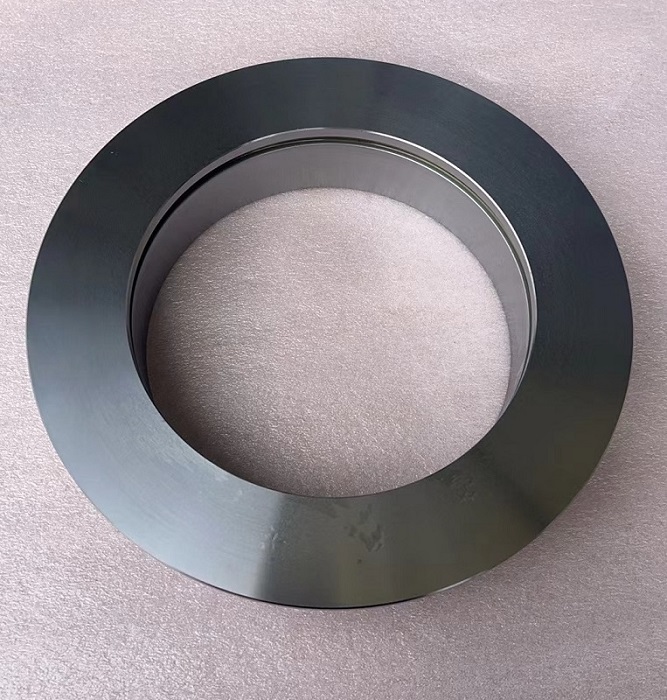
The Role of Coupling Parts in Mechanical Systems
Couplings are mechanical devices designed to connect two shafts and transmit rotational power from one component to another. They are commonly used in motors, pumps, compressors, conveyors, industrial automation equipment, and various transmission systems. Depending on the operating environment, coupling designs may need to accommodate minor shaft misalignment, absorb vibration, or maintain stable torque transmission.
The dimensional accuracy of each coupling component directly influences the quality of the connection. Incorrect bore dimensions, inconsistent concentricity, or poorly finished contact surfaces can contribute to vibration, uneven loading, and premature wear. For this reason, manufacturing precision is an important consideration throughout the production process.
How CNC Machining Supports Dimensional Accuracy
Computer Numerical Control (CNC) machining uses programmed instructions to control cutting tools and machine movements. This process enables manufacturers to produce complex geometries with repeatable dimensions and controlled machining operations. Turning, milling, drilling, boring, and threading are among the common processes used to manufacture coupling components.
For CNC Machining coupling parts, controlling critical dimensions is particularly important. Shaft bores, keyways, threaded holes, mounting faces, and external diameters must correspond to the engineering drawings and assembly requirements. CNC equipment can maintain consistent machining paths and reduce variations caused by manual operations, although actual accuracy still depends on machine condition, tooling, workholding, programming, and process control.
Material Selection and Machining Considerations
Material selection is another major factor in coupling manufacturing. Carbon steel is frequently used where strength and general mechanical performance are required. Stainless steel may be selected for applications involving moisture, corrosive environments, or specific hygiene requirements. Aluminum alloys are also used when reducing component weight is an important design consideration.
Different materials present different machining characteristics. Harder materials may require suitable cutting tools, controlled cutting speeds, and effective heat management. Softer materials can create challenges involving surface finish, chip formation, and dimensional stability. Manufacturers therefore need to consider material properties together with the intended operating conditions before determining machining parameters.
Quality Inspection and Tolerance Management
Quality inspection helps verify whether manufactured components meet their specified engineering requirements. Important inspection items may include bore diameter, outer diameter, concentricity, perpendicularity, surface roughness, and thread accuracy. Depending on the component design and required tolerance, measuring instruments such as micrometers, bore gauges, coordinate measuring machines, and surface roughness testers may be used.
For CNC Machining coupling parts, inspection should focus on dimensions and geometric relationships that affect assembly and transmission performance. A component may satisfy individual dimensional requirements but still encounter assembly difficulties if critical features are not properly aligned. This makes geometric tolerance control and inspection planning essential parts of the manufacturing process.
Applications Across Industrial Sectors
Precision-machined couplings are used in a wide range of industrial applications. In automated production lines, they connect drive motors with mechanical transmission components. In pumping systems, they help transfer rotational motion between motors and pump shafts. Manufacturing machinery also relies on properly designed couplings to support stable operation and coordinated movement.
Application requirements vary according to torque, rotational speed, operating temperature, vibration, installation conditions, and maintenance expectations. Consequently, coupling dimensions and structural configurations should be determined according to the actual mechanical system rather than relying on a universal design.
Manufacturing Trends and Future Requirements
Developments in industrial automation and precision engineering are encouraging greater attention to machining consistency, production traceability, and inspection efficiency. Digital production monitoring, improved cutting tools, and advanced measurement technologies are helping manufacturers evaluate machining performance and identify process variations more effectively.
At the same time, equipment designers are paying closer attention to component weight, energy efficiency, material utilization, and service life. These considerations are influencing coupling design and manufacturing decisions across multiple industrial sectors.
Conclusion
The performance of a mechanical transmission system depends not only on its overall design but also on the accuracy and reliability of its individual components. CNC Machining coupling parts contribute to this performance through controlled dimensions, suitable material selection, and consistent manufacturing quality. As industrial machinery continues to require greater precision and operational stability, machining processes and quality inspection methods will remain important factors in coupling production.
Send Inquiry



X
We use cookies to offer you a better browsing experience, analyze site traffic and personalize content. By using this site, you agree to our use of cookies.
Privacy Policy