 English
 Español
  Português
  русский
  Français
  日本語
日本語  Deutsch
  tiếng Việt
  Italiano
  Nederlands
  ภาษาไทย
  Polski
  한국어
한국어  Svenska
  magyar
  Dansk
Dansk  Suomi
Suomi  العربية
  ελληνικά
  český
český 

How Does a Forging Part Group Improve Strength, Reliability, and Manufacturing Efficiency?
Article Summary
Forged components are widely used in industries that demand durability, precision, and long-term mechanical reliability. A Forging Part Group refers to a collection of forged components designed to work together within mechanical systems such as automotive assemblies, heavy equipment, industrial machinery, and energy infrastructure. This article explains how forging part groups are produced, why they outperform other manufacturing methods, and how businesses can choose the right supplier. The guide also addresses common buyer concerns such as material strength, dimensional accuracy, production consistency, and cost efficiency.
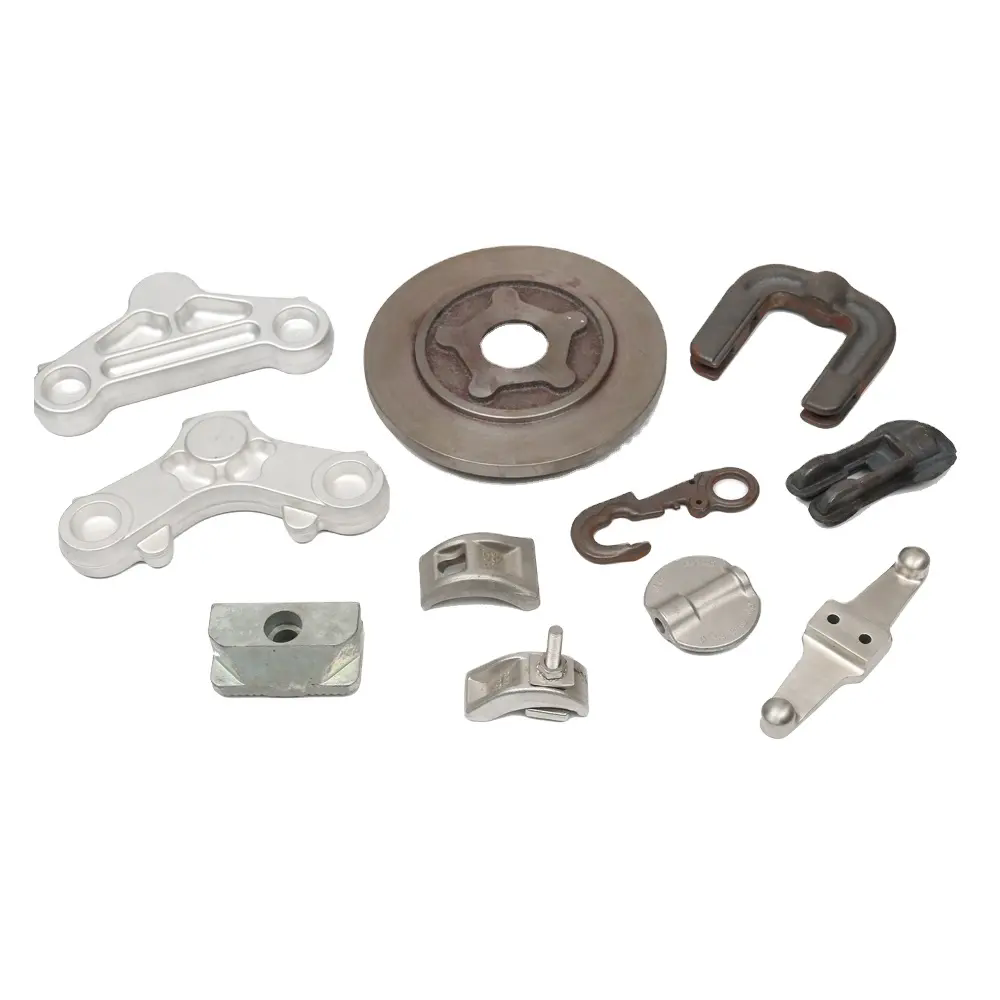
Table of Contents
- Introduction to Forging Part Groups
- How the Forging Process Creates High-Strength Components
- Key Materials Used in Forging Part Groups
- Main Advantages of Forged Component Groups
- Industrial Applications of Forging Part Groups
- Important Technical Parameters to Evaluate
- Common Customer Challenges and Practical Solutions
- How to Select a Reliable Forging Manufacturer
- Frequently Asked Questions
- Conclusion
Introduction to Forging Part Groups
Manufacturers across industries rely on high-strength metal components that can withstand heavy loads, high temperatures, and constant mechanical stress. One of the most effective manufacturing methods for producing such components is forging. When multiple forged components are designed and manufactured as a coordinated set, they are typically referred to as a Forging Part Group.
A forging part group may include shafts, flanges, rings, brackets, couplings, or structural supports that operate together within a mechanical system. Producing these parts using forging techniques enhances structural integrity and improves the mechanical properties of the metal, making the parts significantly stronger than those produced by casting or machining alone.
Industries such as automotive manufacturing, oil and gas, heavy machinery, construction equipment, and power generation often require forging part groups because system reliability depends on every individual component performing consistently under demanding conditions.
How the Forging Process Creates High-Strength Components
Forging is a manufacturing process that shapes metal using compressive forces. The material is heated to a controlled temperature and then shaped through pressing, hammering, or rolling. During this process, the internal grain structure of the metal becomes refined and aligned with the shape of the part.
This controlled deformation improves mechanical strength, fatigue resistance, and impact tolerance. As a result, forged components are capable of handling dynamic stress much more effectively than components produced through casting or fabrication.
The production workflow for a forging part group generally includes several critical stages:
- Raw material selection and cutting
- Controlled heating in forging furnaces
- Die forging or open-die shaping
- Trimming and rough machining
- Heat treatment for strength optimization
- Precision machining and surface finishing
- Dimensional inspection and quality verification
Because all parts within the group are manufactured under controlled processes, dimensional compatibility between components can be maintained with high precision.
Key Materials Used in Forging Part Groups
Material selection plays a vital role in determining the final performance of forged components. Different industries require different mechanical properties such as corrosion resistance, fatigue strength, and wear resistance.
| Material Type | Main Characteristics | Typical Applications |
| Carbon Steel | High strength, cost-effective, good machinability | General machinery parts, shafts, flanges |
| Alloy Steel | Enhanced hardness and fatigue resistance | Automotive components, transmission parts |
| Stainless Steel | Excellent corrosion resistance | Chemical equipment, marine hardware |
| Aluminum Alloys | Lightweight with good strength-to-weight ratio | Aerospace and transportation components |
| Titanium Alloys | Exceptional strength and heat resistance | Aerospace structures and high-end engineering |
The selection of appropriate material ensures the forging part group performs reliably within its operating environment.
Main Advantages of Forged Component Groups
Companies often choose forging part groups because they offer several significant engineering and operational benefits.
- Superior Mechanical Strength – The forging process enhances grain flow and increases structural integrity.
- Improved Fatigue Resistance – Forged components resist repeated loading cycles more effectively.
- Higher Reliability – Uniform microstructure reduces the risk of internal defects.
- Better Dimensional Accuracy – Precision dies ensure consistent shapes across production batches.
- Cost Efficiency in Large Production – Once tooling is established, forging allows efficient mass production.
These advantages make forging the preferred solution for critical mechanical components where safety and durability are essential.
Industrial Applications of Forging Part Groups
Forged component groups are used in a wide variety of industrial sectors due to their high performance and reliability.
| Industry | Typical Forged Components | Operational Requirements |
| Automotive Manufacturing | Crankshafts, gears, connecting rods | High fatigue resistance and durability |
| Oil and Gas | Flanges, valves, pipeline connectors | High pressure and corrosion resistance |
| Construction Equipment | Axles, joints, heavy brackets | Impact strength and load capacity |
| Power Generation | Turbine shafts, structural components | Thermal stability and reliability |
| Industrial Machinery | Gear blanks, couplings, shafts | Precision and long service life |
Important Technical Parameters to Evaluate
When selecting a forging part group, buyers should carefully review technical specifications to ensure compatibility with their equipment and operating conditions.
- Material grade and chemical composition
- Heat treatment process
- Tensile strength and yield strength
- Hardness level
- Dimensional tolerance
- Surface finish quality
- Non-destructive testing results
Reliable manufacturers conduct multiple quality inspections during production to guarantee these parameters meet strict engineering standards.
Common Customer Challenges and Practical Solutions
Companies sourcing forging part groups often face several challenges during procurement and integration.
Challenge 1: Inconsistent Product Quality
Solution: Work with manufacturers that maintain strict quality control systems and conduct mechanical testing for every production batch.
Challenge 2: Long Production Lead Times
Solution: Choose suppliers with integrated forging, machining, and heat treatment capabilities to reduce production delays.
Challenge 3: Dimensional Incompatibility
Solution: Ensure engineering drawings and tolerances are clearly defined before manufacturing begins.
Experienced manufacturers such as Jinggang maintain advanced production facilities and engineering expertise to deliver forging part groups that meet complex industrial requirements.
How to Select a Reliable Forging Manufacturer
Choosing the right supplier is critical for long-term product performance and supply stability.
- Evaluate the manufacturer’s forging equipment and production capacity
- Review quality inspection processes and certifications
- Confirm experience with similar industrial applications
- Assess machining and finishing capabilities
- Ensure the supplier offers engineering support and customization
A professional forging manufacturer will provide both technical consultation and stable production capacity, ensuring that each component within the forging part group functions perfectly within the final assembly.
Frequently Asked Questions
What is the difference between forged and cast components?
Forged components are formed by compressive forces that refine the metal grain structure, resulting in higher strength and durability. Cast components are produced by pouring molten metal into molds, which may introduce internal defects or porosity.
Can forging part groups be customized?
Yes. Most manufacturers offer customized forging solutions based on engineering drawings, material specifications, and mechanical requirements.
What industries benefit most from forging components?
Industries that require high mechanical strength and reliability—such as automotive, heavy machinery, energy production, and infrastructure development—frequently rely on forging components.
How long do forged parts typically last?
With proper material selection and heat treatment, forged components can operate for many years under heavy mechanical loads without structural failure.
Conclusion
Forging part groups provide an effective solution for industries that demand high-strength metal components capable of performing under extreme conditions. Through controlled deformation processes, forging enhances the internal structure of metals, producing components with superior mechanical properties and long service life.
By selecting the right materials, verifying key technical parameters, and partnering with experienced manufacturers, businesses can ensure reliable system performance and reduced maintenance costs. Companies like Jinggang continue to develop advanced forging solutions that meet the evolving needs of global industrial markets.
If your project requires durable, precision-engineered forged components designed for demanding industrial applications, professional support can make the difference. Contact us today to learn more about customized forging part group solutions and discover how the right manufacturing partner can help improve the strength, reliability, and efficiency of your equipment.
Send Inquiry



X
We use cookies to offer you a better browsing experience, analyze site traffic and personalize content. By using this site, you agree to our use of cookies.
Privacy Policy